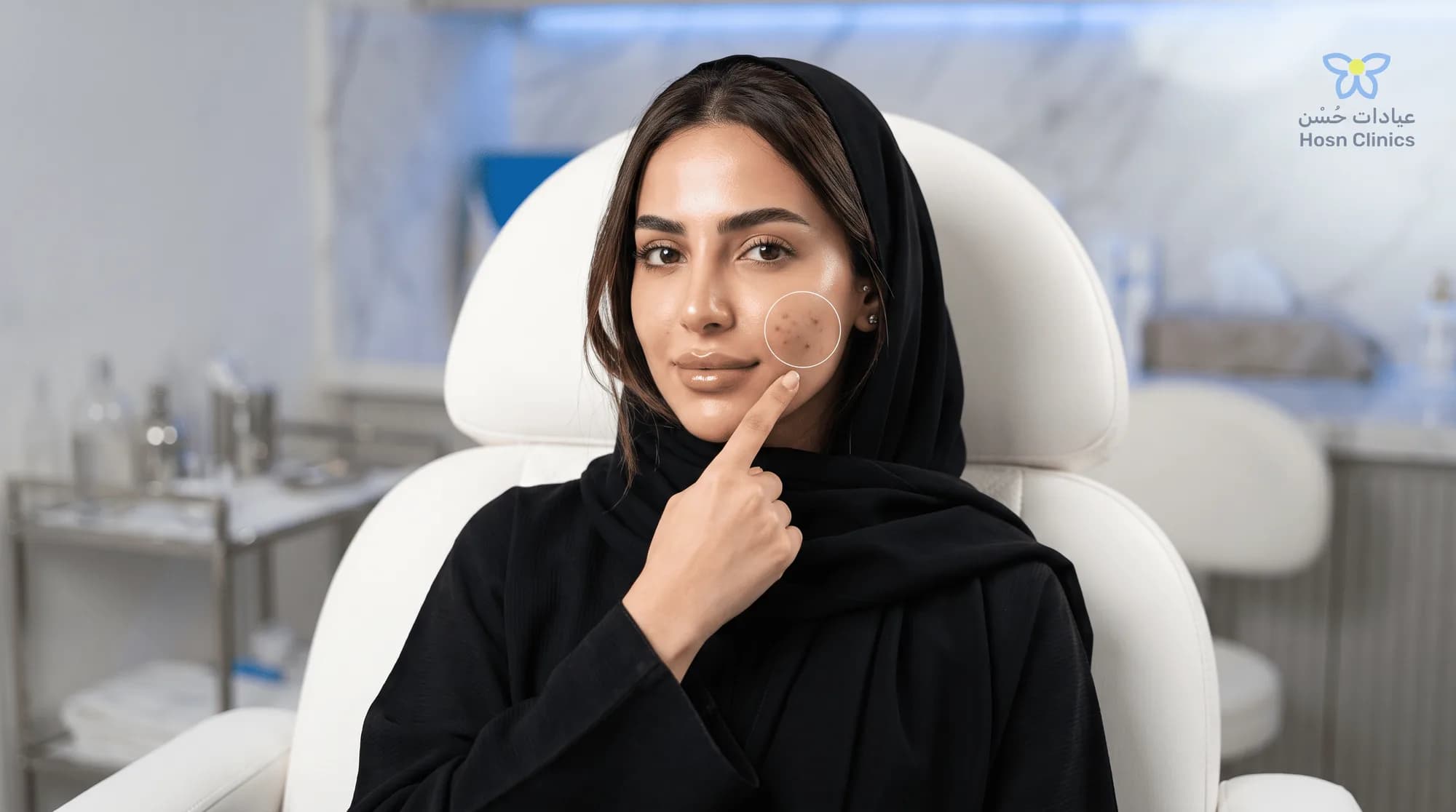
Acne scar treatment starts with one thing: identifying the type of scar, then matching it to the right technique — fractional laser, fractional CO2, microneedling or a chemical peel. The result is a visible improvement in skin texture and shallower pitting, but it takes more than one session and a plan your doctor sets after assessing your skin.
Even after the breakouts themselves have cleared, the marks can stay for a long time as pitting, pigmentation or changes in skin texture, and that affects both how your skin looks and how confident you feel. This guide walks you through the types of scars, what suits each one, what to do after a session, and how long results take for women in Khobar, Dammam, Dhahran, Riyadh and Jeddah.
What are acne scars and how do they form?
Acne scars occur when the skin experiences severe inflammation during breakouts. The layers of the skin are damaged and the production of collagen — the protein responsible for keeping skin smooth and elastic — becomes disrupted.
In some cases the body produces too little collagen, which leads to pitting and depressed scars. In other cases it produces too much, which leads to scars raised above the surface of the skin.
How severe the scarring becomes differs from person to person depending on:
- How inflamed the breakouts were.
- How the breakouts were handled.
What is the difference between acne marks and acne scars?
Many people confuse the two, but the difference is clear and it decides which treatment you need.
Acne marks
These are the pigmented red and brown spots left behind after a breakout clears. They usually fade gradually over time or with the right treatments. They behave much like other pigmentation concerns, so it helps to read about melasma and pigmentation treatment in Khobar to tell them apart from true scarring.
Acne scars
These are relatively permanent changes in the texture of the skin — pitting, depressions or raised scars — and they usually need specialised treatment sessions to improve in a meaningful way.
What types of facial acne scars are there?
Identifying the type of scar makes it far easier to choose the right treatment and get the best possible result.
Atrophic scars (pitting)
These are the most common type and appear as depressions in the skin caused by collagen loss. They include:
- Ice pick scars: deep and narrow, resembling small puncture marks in the skin.
- Boxcar scars: depressions with clearly defined edges, wider than ice pick scars.
- Rolling scars: broad depressions that give the skin an uneven, wavy appearance.
Raised scars
These form when the skin produces too much collagen while healing, and they can be more common in some people. They need a proper assessment before any technique is chosen.
What makes acne scarring worse?
Some factors make scars more visible or harder to treat, including:
- Delaying acne treatment.
- Picking or squeezing breakouts.
- Severe, repeated inflammation.
- Continuous sun exposure.
- Neglecting skincare.
- Genetic factors.
With strong sun all year round in Khobar, Dammam and Riyadh, that fourth point matters more than any other, so daily sunscreen is not optional. If your skin is oily, pick a light formula that will not clog your pores — our guide to the best sunscreen for oily skin goes into detail.
This is why treating acne early is always recommended: it lowers the chance of scarring later.
Why does diagnosis matter before treatment?
Before any session begins, the doctor examines the skin and determines:
- The type of scarring.
- The depth of the pitting.
- Your skin tone.
- How damaged the skin is.
- Whether marks or pigmentation are present alongside the scars.
That assessment is what makes it possible to build a treatment plan capable of delivering the best results.
What are the latest techniques for treating acne scars?
Recent years have brought significant progress in the treatment of facial scars and acne marks, and skin appearance can now be improved noticeably with specialised sessions that suit a wide range of skin types.
Fractional laser
One of the best known techniques for treating acne scars, it works by stimulating collagen production within the layers of the skin, which helps to:
- Improve skin texture.
- Reduce the depth of pitting.
- Even out skin tone.
- Support the skin renewal process.
Results appear gradually as sessions continue, according to the plan your doctor sets.
Fractional CO2
Used for moderate to deep scarring, it rebuilds the layers of the skin and stimulates new collagen production. It helps to:
- Improve the appearance of scars.
- Reduce enlarged pores.
- Renew the skin.
- Increase smoothness.
Microneedling
This technique uses very fine needles to stimulate the skin natural healing process. Its main benefits are:
- Improving facial scarring.
- Activating collagen production.
- Improving skin elasticity.
- Reducing acne marks and pigmentation.
It is a suitable option for many cases with mild to moderate scarring.
Microneedling with radiofrequency (RF)
This combines fine needling with heat energy to stimulate the skin at a deeper level, helping to:
- Tighten the skin.
- Improve deep pitting.
- Stimulate collagen more efficiently.
- Enhance skin renewal results.
Chemical peels and skin renewal techniques
Chemical peels help improve acne marks and the surface pigmentation that often accompanies acne scarring. They help to:
- Improve skin texture.
- Reduce pigmentation.
- Boost facial radiance.
There are different types and strengths, so before you decide, look at the differences between chemical peel types and discuss them with your doctor.
PRP sessions for skin renewal
Modern platelet-rich plasma techniques are used to stimulate the skin own repair processes and improve the appearance of scars over time. They help to:
- Activate the cells.
- Support collagen production.
- Improve skin texture.
- Enhance the results of other treatments.
If you want more detail on this session and others like it, read about PRP, botox and fillers at Hosn Clinics.
Biostimulator injections for collagen
In some cases the doctor may recommend products that stimulate the skin own collagen production, which contributes to:
- Improving deep pitting.
- Increasing skin density.
- Improving elasticity.
- Restoring a more youthful appearance.
Quick table: which technique suits which scars?
| Technique | Best suited to | How it works |
|---|---|---|
| Fractional laser | Pitting and uneven texture | Stimulates collagen inside the skin layers |
| Fractional CO2 | Moderate to deep scarring | Rebuilds the layers of the skin |
| Microneedling | Mild to moderate scarring | Fine needling that triggers natural healing |
| Microneedling with RF | Deep pitting with some laxity | Fine needling plus deeper heat energy |
| Chemical peel | Acne marks and surface pigmentation | Renews the surface layer of the skin |
| PRP | Supporting the results of other techniques | Stimulates the skin natural repair |
The table is a general guide only; the final decision belongs to your doctor after seeing your skin in person.
Can more than one technique be combined?
Yes. In many cases the doctor does not rely on a single technique but builds a plan that combines several treatments for better results, depending on the type and severity of the scarring. Such a plan may include:
- Laser.
- Microneedling.
- Chemical peels.
- Skin renewal sessions.
If you want an idea of what a plan and its cost look like before you start, see our page on cosmetic session prices at Hosn Clinics.
When do acne scar treatment results appear?
Results differ from one person to another depending on several factors, including:
- The type of scarring.
- The depth of the pitting.
- The number of sessions.
- How the skin responds to treatment.
- How closely you follow your doctor instructions.
In most cases the first improvements appear gradually after the early sessions, while the skin keeps producing collagen for several months after treatment. In other words, the final verdict takes patience.
What should I do after an acne scar session?
To get the best possible outcome, follow this aftercare advice:
- Use sunscreen every single day.
- Moisturise regularly, especially with air conditioning drying your skin out all day.
- Avoid picking at your skin.
- Stick to the prescribed treatment plan.
- Avoid strong exfoliants without asking your doctor.
- Drink enough water.
- Follow a skincare routine suited to your skin type.
With the humidity of the Eastern Province and frequent dust, keep your cleanser gentle when you get home, and ask your doctor when you can go back to makeup and exfoliating products.
Can acne scars be treated in summer?
Yes, with some techniques, but only with strict sunscreen use and no direct sun exposure. Your doctor decides the best timing based on the type of session and your skin tone. Many women prefer the summer holidays because staying indoors is easier, but if you have travel or events coming up, plan your appointments with your doctor from the start — the Gulf summer heat and strong sun leave little room for improvisation.
Do acne scars disappear completely?
That depends on the type and depth of the scarring, but modern techniques have made a real difference in improving how scars look and making them far less noticeable.
In many cases a significant improvement is achievable, leaving the skin smoother and more even. No one can promise you a guaranteed result, which is exactly why a consultation with a specialist before you start is essential.
Why is early treatment better?
The earlier acne marks and scars are treated, the better the skin responds. Early treatment helps to:
- Prevent scarring from getting worse.
- Reduce the number of sessions needed.
- Improve the final results.
- Restore radiance faster.
Why choose Hosn Clinics for acne scar treatment?
At Hosn Clinics the type and depth of your scarring is identified precisely before a customised treatment plan is created, using the latest laser, microneedling and skin renewal technology, under the supervision of leading dermatology and aesthetics doctors so you get the best results with the highest safety standards.
Whether you are in Khobar, Dammam or Dhahran, or travelling in from Riyadh or Jeddah, you can book a consultation and leave your first visit with a clear plan. Book your appointment at Hosn Clinics or message us on WhatsApp and we will arrange a time that suits you.
Key takeaways
- Acne scars are not the same as acne marks: scars change the texture of the skin, marks are surface pigmentation that fades.
- Identifying the scar type — ice pick, boxcar, rolling or raised — is the first step in treatment.
- The main techniques are fractional laser, fractional CO2, microneedling, microneedling with RF, chemical peels, PRP and collagen biostimulators.
- Most cases need more than one session, and improvement continues for months after the last one.
- Sunscreen and moisturising after a session matter as much as the session itself.
- Early treatment means fewer sessions and a better final result.
- Consult a specialist before deciding anything — every skin needs its own plan.
Acne scars are not something you have to live with forever. With an accurate diagnosis, the right technique and consistent aftercare, smoother, clearer skin and real confidence in the mirror are well within reach.
Comments
Be the first to comment on this article.
Add your comment