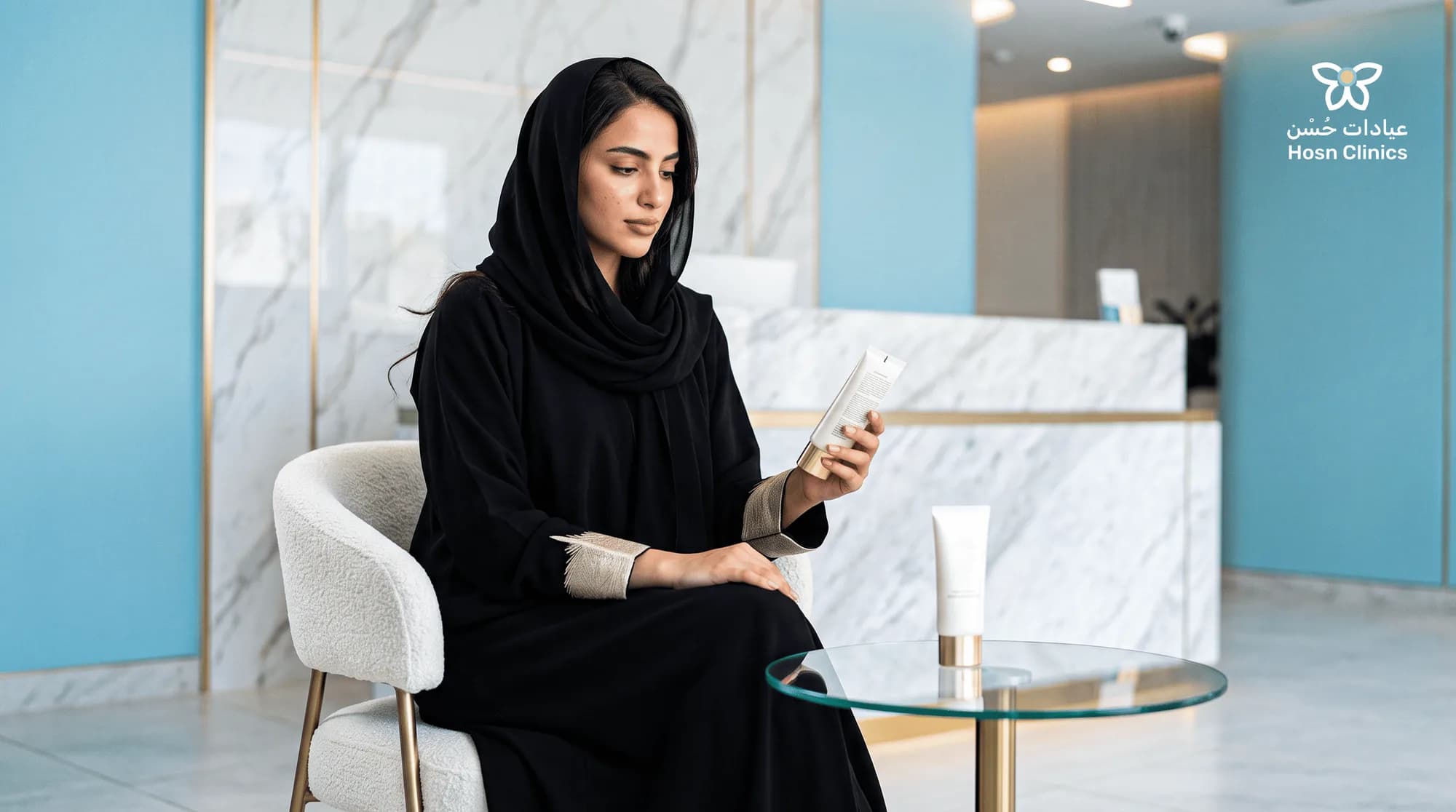

Short answer first: the best sunscreen for oily skin combines three things — broad-spectrum protection with at least SPF 30, an oil-free formula that will not clog pores, and a light, matte texture that absorbs quickly without leaving shine. That combination matters far more than the brand name on the bottle.
Not every sunscreen suits oily skin. The wrong product increases shine, clogs pores and triggers breakouts, which is why many people give up on sunscreen altogether — the single biggest mistake you can make for your skin. With long, hot summers, the humidity of Khobar and Dammam, occasional dust, and air conditioning running all day, daily protection is a necessity rather than a luxury.
If you are looking for the best sunscreen for oily skin, it comes down to understanding the type of filters used, the right level of protection, the texture of the product, and how well it works with acne-prone skin or daily wear under makeup. All of these are things you can check on the packaging before you buy.
In this guide we cover how to choose the right sunscreen for oily skin, the difference between mineral and chemical filters, what SPF is appropriate, and the most important tips for using it correctly.
Why does oily skin need sunscreen?
Some people assume oily skin does not need sun protection because it produces oil naturally, but the truth is that every skin type is vulnerable to ultraviolet radiation. Natural sebum does not form a protective layer.
Ongoing sun exposure can lead to:
More pigmentation and dark spots.
Faster appearance of signs of ageing.
Skin irritation.
Worsening acne marks.
A higher likelihood of UV-related skin damage.
Many acne treatments also contain ingredients that make the skin more sensitive to the sun, which makes sunscreen essential rather than optional. If you already have older marks, unprotected sun exposure makes acne scars more visible and harder to improve.
What makes a sunscreen right for oily skin?
Not every sunscreen suits oily skin. There are certain characteristics worth looking for when buying, the most important being:
A lightweight formula.
Oil-free.
Non-comedogenic (does not clog pores).
Fast absorbing.
A matte or semi-matte finish.
No greasy film left on the skin.
These features help protect the skin without adding shine or a heavy feel — and that is exactly what keeps a sunscreen in your daily routine instead of forgotten in a drawer.
How to choose the best sunscreen for oily skin
1. Choose the right texture
Texture is one of the biggest comfort factors for daily use. For oily skin it is best to choose:
Gel.
Fluid.
A light lotion.
A sunscreen serum.
Heavier creams may be less suitable for some people because they can feel greasy, especially on hot and humid days.
2. Make sure it will not cause breakouts
If your skin is prone to acne, look for products labelled Non-Comedogenic and Oil-Free, which means the formula is designed to reduce the chance of clogged pores.
3. Choose broad-spectrum protection
Broad-spectrum sunscreen protects against:
UVA rays, responsible for ageing and pigmentation.
UVB rays, responsible for sunburn.
Protection from both is essential for healthy skin, so do not rely on an SPF number alone on the label.
Mineral vs chemical sunscreen: what is the difference?
One of the most common questions when buying sunscreen is which is better: mineral or chemical? Let us break it down calmly.
Mineral sunscreen
Based on mineral ingredients such as zinc oxide and titanium dioxide, it reflects part of the ultraviolet radiation while providing effective protection.
Advantages:
Suitable for sensitive skin.
Lower chance of irritation.
Works immediately after application.
Disadvantages:
May leave a white cast on some skin tones.
Some formulas are thicker.
Chemical sunscreen
Uses filters that absorb ultraviolet radiation and convert it into harmless heat before it affects the skin.
Advantages:
Lightweight texture.
Fast absorbing.
Usually leaves no white cast.
Suitable for daily use and under makeup.
Disadvantages:
May not suit some people with sensitive skin if the formula contains irritating ingredients.
Which is better for oily skin?
There is no single answer for everyone. If your skin is oily and very sensitive, a mineral sunscreen may be a good option. If it is simply oily, many modern chemical sunscreens have a light texture and a non-greasy finish, and may be more comfortable for daily use.
What matters most is choosing a product that suits your skin needs and offers broad-spectrum protection.
Quick comparison table
| Criterion | Mineral sunscreen | Chemical sunscreen |
|---|---|---|
| How it works | Reflects part of the ultraviolet radiation | Absorbs UV and converts it into harmless heat |
| Common ingredients | Zinc oxide and titanium dioxide | UV-absorbing chemical filters |
| Texture | Thicker in some formulas | Light and fast absorbing |
| White cast | Possible on some skin tones | Usually none |
| When it starts working | Immediately after application | Per product instructions |
| Best for | Oily but sensitive or easily irritated skin | Daily wear and use under makeup |
Which SPF is enough?
SPF (sun protection factor) indicates the level of protection against UVB rays. For daily use in a climate that stays hot and sunny most of the year, as it does in Riyadh, Khobar and Jeddah, the general recommendation is:
SPF 30 as a minimum.
SPF 50 for longer sun exposure or outdoor activities.
It is important to know that a higher SPF does not remove the need to reapply: sunscreen should be renewed roughly every two hours with direct sun exposure, or after heavy sweating or swimming.
Is SPF 100 always better?
Some people assume SPF 100 offers double the protection of SPF 50, but the difference in the actual percentage of protection is limited. Correct application and reapplication remain the two factors that affect effectiveness the most.
Which texture suits the Gulf summer heat and Eastern Province humidity?
Temperatures here are high across most cities, and coastal areas such as Khobar, Dammam and Jeddah add high humidity, so it is better to choose products that feel refreshing and do not leave a shiny film on the skin.
Lightweight, fast-absorbing formulas are usually more comfortable for daily use, especially when going out for long periods or during work and study. In Riyadh and Dhahran the air is drier and dustier, so a light texture paired with a suitable moisturiser tends to feel best.
If you have a trip or a summer holiday coming up, it helps to read about preparing your skin before summer travel so it is ready for longer sun exposure.
Sunscreen that does not cause breakouts: what to look for
If your skin struggles with acne or blackheads, choosing the right sunscreen is just as important as your cleanser or acne treatment. Look for products that are:
Oil-free.
Non-comedogenic.
Lightweight on the skin.
Suitable for oily or acne-prone skin.
Fragrance-free if your skin is sensitive.
It is also best to remove sunscreen thoroughly at the end of the day with a suitable cleanser to keep pores clear. Skipping that step alone can cause breakouts, and the sunscreen usually gets the blame unfairly.
Can sunscreen be worn under makeup?
Yes — in fact this is one of the most common ways to use it. For the best result:
Apply sunscreen after your moisturiser.
Wait a few minutes for the skin to absorb it.
Then apply primer or foundation if you wish.
Choose a lightweight formula that will not pill under makeup and leaves the skin looking natural. If you plan to reapply over makeup, a spray or powder sunscreen is easier to top up during the day.
How to apply sunscreen correctly
Even the best sunscreen will not give the protection you need if it is not used properly. Follow these steps:
Apply it a suitable time before sun exposure, according to the product instructions.
Use enough product to cover your face and neck.
Do not forget your ears and the back of your neck if exposed.
Reapply regularly when staying outdoors.
Use it daily, even on cloudy days, since UV rays can penetrate cloud.
Remember that sunlight also comes through car and office windows, so wearing sunscreen indoors or at work is not an overreaction.
Common sunscreen mistakes
Mistakes that can reduce the effectiveness of sunscreen include:
Applying too little product.
Not reapplying.
Using a product unsuited to your skin type.
Relying only on makeup that contains SPF.
Using sunscreen only for beach days and skipping it otherwise.
Avoiding these mistakes helps you get the most from your daily protection.
Does sunscreen need extra moisturiser?
That depends on your skin and the product formula. If your skin is very oily, a hydrating sunscreen may be enough for some people, while others may need a light moisturiser before their sunscreen — especially if they use drying acne treatments.
Air conditioning running all day also dries the surface layer of the skin, which is why your skin can feel oily and tight at the same time. A light, oil-free moisturiser makes a real difference here.
Is sunscreen enough to treat pigmentation?
Sunscreen is the first line of defence, and without it any pigmentation treatment starts again from zero. On its own, though, it is not a treatment. If you have melasma or visible patches, you need a plan with a specialist alongside daily protection.
Melasma and deeper pigmentation need a medical assessment — you can read more about melasma treatment in Khobar.
If you came back from a trip with uneven tanning, there are useful details on repairing sun tan after travel.
And if your skin texture is uneven or your pores look enlarged, learn about the difference between chemical peel types and which one suits oily skin.
In every case, consult a specialist before starting any treatment, particularly if you use active products or have had a reaction in the past.
Tips for choosing the best sunscreen for oily skin
When buying, look for a product that offers:
Broad-spectrum protection.
An SPF of at least 30.
An oil-free formula.
A light, fast-absorbing texture.
Suitability for oily or combination skin.
A non-comedogenic formula.
A non-shiny finish if you struggle with excess shine.
When to book a dermatology consultation at Hosn Clinics
If you are unsure which sunscreen suits your skin, or you are dealing with breakouts or pigmentation alongside oiliness, a skin assessment with a dermatologist at Hosn Clinics helps you choose the most suitable product and build a complete daily routine tailored to your skin type and needs.
Our branches in the Eastern Province are easy to reach, and booking takes a moment. Book your appointment at Hosn Clinics and let a specialist decide what works best for your skin.
Conclusion
Oily skin needs sunscreen just like every other skin type — natural oil offers no UV protection.
Look for: oil-free, non-comedogenic, lightweight texture, matte finish.
SPF 30 as a minimum, SPF 50 for longer exposure, reapplied roughly every two hours.
Mineral suits sensitive skin; modern chemical filters are lighter and better under makeup.
Wear it daily, even on cloudy days and while in the car or at the office.
Cleanse thoroughly at the end of the day to keep pores clear.
Sunscreen protects against pigmentation but does not treat melasma on its own — consult a specialist.
Comments
Be the first to comment on this article.
Add your comment